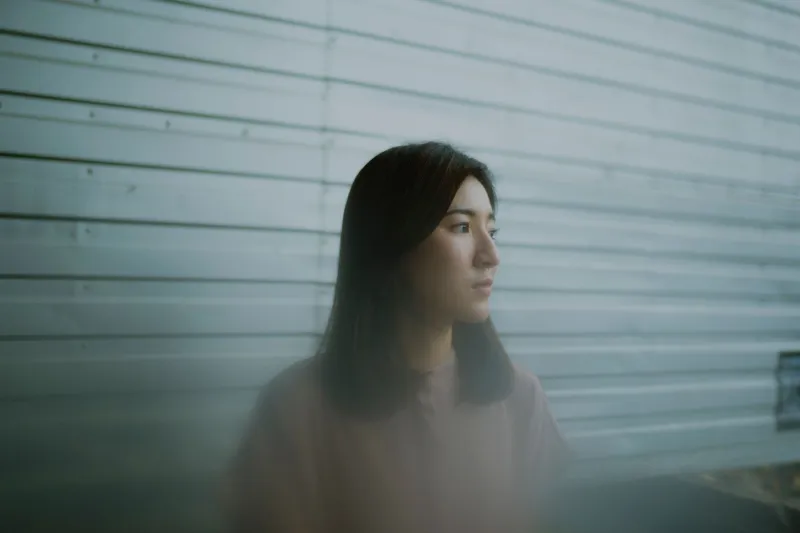
Not Everything Is for Everyone: How Yuka Washio Decides What the World Gets to See

There's a certain kind of celebrity who makes you feel like you know everything about them. Their morning routine, their relationship drama, their skincare shelf, their therapy breakthroughs — all of it, out in the open, served up in real time. And honestly? It works for a lot of people. Fans connect. Numbers climb. The algorithm rewards the exposure.
Then there's Yuka Washio.
Yuka has carved out a completely different lane — one where you feel genuinely connected to her, maybe even close to her, without ever quite being able to say you've seen behind every curtain. It's a balancing act that looks effortless from the outside, but when you pay attention, you start to realize it's one of the most intentional things she does.
The Principle Behind the Curation
Here's the thing about selective visibility: it's not about being secretive. It's about being deliberate. There's a difference, and Yuka seems to understand that difference better than most people in her position.
When she shares something — a moment from a trip, a thought she's been sitting with, a creative project she's been pouring herself into — it always feels considered. Not staged in a cold, calculated way, but chosen. Like she held it up to the light first and decided, yes, this one is worth sharing. This one adds something.
That instinct is rarer than it sounds. In a media landscape where the pressure to post constantly is basically built into the job description, choosing restraint is a kind of quiet rebellion. Yuka leans into it anyway.
What She Puts Out There — and Why It Lands
The content Yuka does share tends to fall into a few recognizable categories: her creative work, moments that reflect her values, and glimpses of personality that feel unguarded without being unfiltered. What you almost never see is the stuff that feels like filler — the obligatory posts, the forced enthusiasm, the content that exists just to fill a calendar slot.
That selectivity is part of why her community responds the way it does. When Yuka shows up, people pay attention, because experience has taught them that what she puts out there actually means something. It's not noise. It's signal.
There's also something to be said for what she withholds. Certain relationships stay off-camera. Certain struggles get acknowledged without being dissected publicly. Certain opinions get kept close. And rather than making her feel distant, that restraint actually deepens the sense of respect her audience has for her. She's treating her own life like it has value beyond content — and that's contagious.
The Psychology of Leaving Space
Psychologists who study parasocial relationships — the one-sided bonds fans form with public figures — have noted something interesting: audiences don't actually need complete access to feel connected. What they need is authenticity within whatever window they're given. The size of the window matters less than the realness of what's visible through it.
Yuka seems to have figured this out intuitively. She doesn't need to give you everything to make you feel like what she's giving you is real. The moments she shares carry weight precisely because they're not buried in an avalanche of lesser moments. There's context. There's breathing room. There's space for the audience to bring their own interpretation.
In American pop culture, where the default mode is maximum exposure, that approach stands out. We're used to celebrities who perform vulnerability like a sport, who turn every setback into content, who share so much that nothing feels particularly sacred anymore. Yuka's version of openness feels different — more like a conversation than a broadcast.
Drawing the Line Without Making It Weird
One of the trickier parts of selective visibility is figuring out how to maintain those boundaries without coming across as aloof or evasive. Some public figures handle this badly — they keep things private in ways that feel pointed or defensive, which only makes fans more curious and sometimes resentful.
Yuka navigates this with a kind of ease that's hard to manufacture. She doesn't make a big deal out of what she's not sharing. She doesn't over-explain her privacy or turn it into a statement. She just... moves on. The line is there, but it's not a wall with warning signs on it. It's more like a natural edge — you can see where the public-facing territory ends, and it doesn't feel like a rejection.
That tone matters enormously. It communicates something like: I value this community enough to show up genuinely, and I value myself enough to keep some things for me. Both of those things can be true at the same time, and Yuka makes that coexistence look easy.
What This Means for the Fan Experience
For the people who follow Yuka closely, this dynamic creates something kind of unusual in the current celebrity landscape: a relationship that doesn't feel transactional. You're not being fed content to keep you engaged. You're being invited into a perspective — selectively, thoughtfully, on terms that feel mutual rather than one-sided.
That's a meaningful distinction. It's the difference between feeling like an audience member and feeling like a genuine part of someone's world. Yuka's community tends to describe their connection to her in the second way, and that's not an accident.
It also means that when something big does get shared — a milestone, a personal reflection, a project she's genuinely excited about — it hits differently. There's no fatigue. No sense of overexposure. Just the clean, clear signal of someone sharing something real.
The Bigger Picture
Yuka Washio isn't the first public figure to embrace selective transparency, but she might be one of the clearest examples of how to do it well in the current moment. At a time when the culture is slowly starting to push back against the everything-all-the-time model of celebrity, she's already living out a different approach — and it's working.
What she's figured out, maybe more than anything else, is that mystery and relatability aren't opposites. You can be genuinely warm, genuinely present, and genuinely connected to your audience while still keeping parts of your life entirely your own. The key isn't how much you share. It's whether what you share is true.
And for Yuka, it always is.