Paying It Forward: How Yuka Washio Is Shaping the Next Wave of Creative Talent
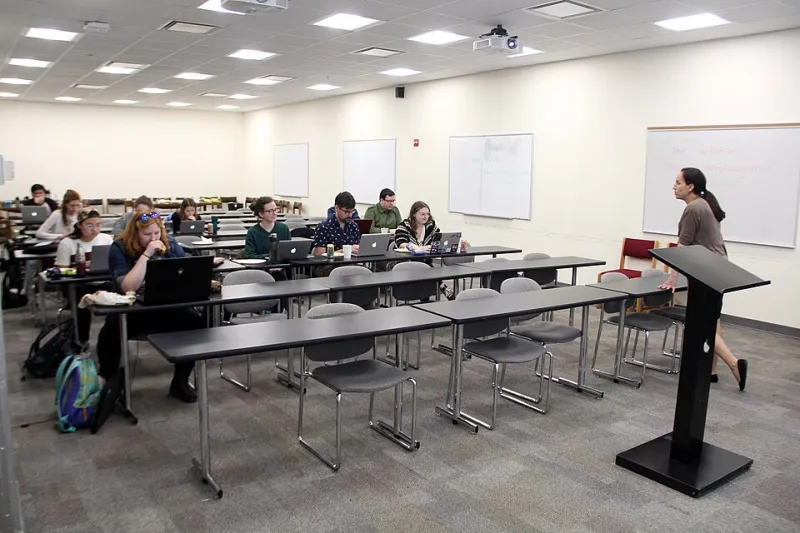
Photo: Avery Jensen, CC BY-SA 4.0, via Wikimedia Commons
Success in entertainment can be a pretty solitary achievement. You grind, you grow, you get to a place where people know your name — and then, for a lot of people, that's where the personal investment ends. The ladder gets pulled up, not extended.
Yuka Washio has never seemed particularly interested in that version of success.
Over the past few years, she's developed a reputation not just for her own creative output, but for the way she shows up for other people who are still figuring theirs out. Emerging artists, young creators navigating the industry for the first time, students who are trying to understand whether there's actually a path forward for someone who looks like them — these are the people Yuka keeps finding ways to reach.
And the people she's reached? They're taking notes.
A Mentorship Style Built on Honesty, Not Hype
One of the things that comes up consistently when mentees talk about working with Yuka is that she doesn't traffic in empty encouragement. She's supportive, absolutely — but the support is grounded in something more useful than cheerleading.
She asks hard questions. She pushes people to be specific about what they actually want, rather than accepting a vague idea of "making it" as a goal. She talks openly about the parts of the industry that are genuinely difficult — the rejection, the uncertainty, the moments where you question whether you're on the right track — without making it feel hopeless. There's a difference between being honest about obstacles and being discouraging, and Yuka seems to understand where that line is.
For young creatives who've grown up watching mentorship portrayed as either a glamorous fast-track or an exploitative power dynamic, her approach lands differently. It feels like something closer to a real conversation between people who are both invested in the outcome.
Representation as a Responsibility
Yuka has spoken in various contexts about what it meant to her, early in her career, to see — or more often, not see — people who shared her background in the kinds of roles and spaces she was working toward. That experience shapes how she thinks about mentorship.
For her, giving back to emerging creators isn't just a feel-good add-on to a successful career. It's connected to a larger belief about what representation actually requires. It's not enough for one person to break through; the conditions that made it harder than it should have been need to change, and that change happens in part through people who've navigated the system turning around and helping others navigate it too.
This perspective resonates particularly strongly with young Asian-American creatives who are trying to build careers in entertainment. Many of them describe Yuka not just as a role model in the abstract, but as someone whose specific, practical engagement with their work has made a concrete difference. She's not just a symbol of possibility. She's an active participant in making it more possible.
The Ripple Effects Are Already Showing Up
Mentorship is the kind of impact that's hard to measure in real time, but the early returns from Yuka's investment in emerging talent are starting to become visible. Creators who've worked with her or been guided by her are showing up in more spaces, landing opportunities they might not have pursued without that push, and — crucially — starting to pay the same kind of attention forward to the people coming up behind them.
That multiplication effect is exactly what good mentorship looks like. One person's investment doesn't stay contained to one relationship; it spreads through a community over time. The creator who gets honest feedback and a useful introduction becomes the person who offers the same thing to someone else a few years down the road.
Yuka seems to understand this dynamic intuitively. She talks about mentorship not as charity but as infrastructure — as the kind of community-building that makes an industry more sustainable and more representative over the long term.
Staying Grounded While Reaching Up
What makes Yuka's approach to mentorship feel sustainable — for her and for the people she works with — is that it doesn't seem to come from a place of obligation or image management. It's not the kind of thing that gets announced with a lot of fanfare and then quietly fades when the PR value runs out.
The through-line in everything she does in this space is a genuine curiosity about other people's creative work and a real investment in seeing it succeed. She shows up to things she doesn't have to show up to. She follows up. She remembers where someone was the last time they talked and asks where they are now.
For a generation of young creators who are skeptical — with good reason — of public figures performing generosity, that consistency matters. It's the difference between an ally and an ambassador, between someone who cares and someone who wants credit for caring.
Why This Is the Work That Lasts
Yuka Washio's creative work will continue to grow and evolve, and her fans will be here for every step of it. But it's worth paying attention to this other dimension of what she's building — the quieter, slower work of investing in people who are just getting started.
The entertainment landscape in 2025 is still figuring out what genuine representation looks like in practice, not just in casting announcements and think pieces. What Yuka is doing — one honest conversation, one useful connection, one real piece of feedback at a time — is part of what that looks like in practice.
The next generation of diverse creative talent in American entertainment is going to be shaped by a lot of forces. Yuka Washio is clearly determined to be one of them.