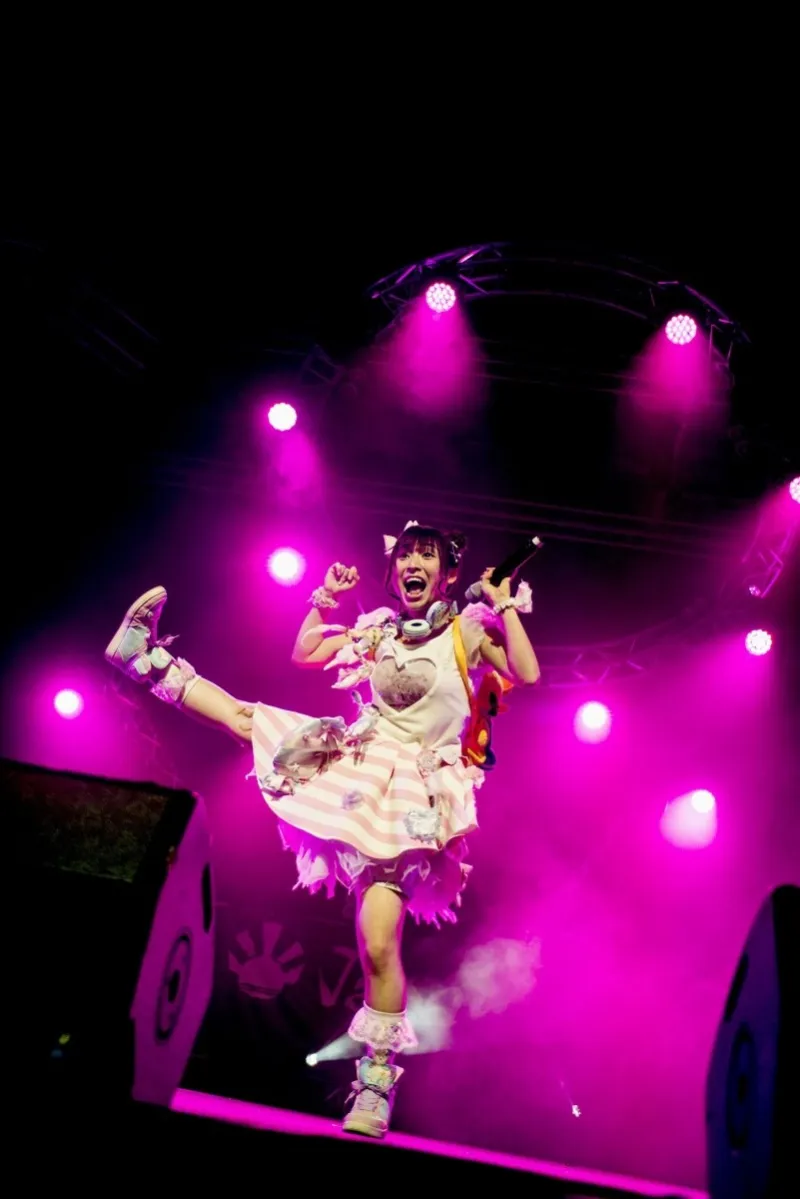
East Meets West: The Story of How Yuka Washio Won Over American Fans One Connection at a Time
Photo: Miguel Discart, CC BY-SA 2.0, via Wikimedia Commons
In 2024, the idea of a Japanese entertainer building a meaningful following in the United States isn't surprising in theory — but in practice, it's still genuinely hard to pull off. Cultural gaps are real. Language barriers exist. The American entertainment landscape is crowded and competitive, and breaking through requires more than talent alone.
So when you look at the community that has grown around Yuka Washio stateside, it's worth asking: how did this actually happen? What does it take to build authentic cross-cultural resonance, and what can Yuka's journey tell us about the evolving nature of global fandom?
Let's dig in.
The Global Entertainment Shift That Created the Opening
To understand how Yuka found an American audience, you have to zoom out a little and look at the broader cultural moment we're living in. The last several years have fundamentally changed how American audiences engage with international entertainment.
The explosive mainstream success of K-pop, the global embrace of anime, the Oscar-winning run of Parasite, the streaming boom that put subtitled content front and center on living room TVs across the country — all of it has done something important. It's trained American audiences to be genuinely open to content and personalities that originate outside the US.
That openness created a real opportunity for Japanese entertainers with something compelling to offer. Yuka Washio arrived at a moment when the door wasn't just cracked — it was wide open for the right kind of talent.
What Crossed the Pacific: Understanding Yuka's Universal Appeal
Opportunity only matters if you have something worth bringing through the door. And this is where Yuka's story gets genuinely interesting.
There are certain qualities in an entertainer that don't require translation. Charisma is one of them. Emotional authenticity is another. The ability to make an audience feel genuinely seen — even through a screen, even across a language gap — is rare, and it doesn't care about geography.
For American fans discovering Yuka's work, the initial hook was often exactly that: a feeling. Something in her delivery, her energy, or her presence that resonated before they'd fully processed the content itself. That instinctive connection is what turns a casual viewer into someone who goes looking for more.
From there, the depth of her work does the rest. There's enough to explore, enough to discuss, enough to genuinely invest in — and that's what sustains a fanbase over time.
The Role of the Community: Fandom as a Bridge
Here's something that often gets underestimated in conversations about cross-cultural fandom: the fans themselves are doing serious work.
Building an international audience isn't solely the responsibility of the entertainer or their team. A huge part of what brought Yuka's work to American eyes and ears was the effort of dedicated fans who translated, subtitled, clipped, shared, and contextualized her content for audiences who might not have found it otherwise.
This is modern fandom doing what it does best. Fan communities on platforms like Reddit, Twitter/X, YouTube, and TikTok have become genuine distribution networks — not in a commercial sense, but in a grassroots, "you have to see this" sense. When a fan in Ohio shares a clip with context that helps their followers understand why it matters, they're building a cultural bridge, brick by brick.
The Yuka Washio fan community in the US has been doing exactly that, and the results speak for themselves. The fanbase didn't just appear — it was cultivated, largely by people who cared enough to do the work of making her world accessible.
Navigating the Cultural Gap: What Made It Work
Cross-cultural appeal isn't automatic, and it's not always comfortable. There are real differences between Japanese and American entertainment culture — in tone, in format, in what audiences expect from public figures — and navigating those differences thoughtfully matters.
What's worked in Yuka's case is a combination of staying true to her roots while remaining genuinely curious about and engaged with her international audience. That balance is harder than it sounds. Lean too hard into performing for a foreign audience and you lose the authenticity that made people interested in the first place. Ignore the cross-cultural dimension entirely and you miss opportunities to connect.
The sweet spot — being authentically yourself while being open to the fact that your audience is diverse and global — is exactly where the most successful cross-cultural entertainers tend to live. From what fans on both sides of the Pacific have observed, Yuka operates comfortably in that zone.
Social Media as the Great Equalizer
It's impossible to tell this story without talking about the role of social media in making cross-cultural fandom viable at scale.
Not long ago, an American fan's ability to follow a Japanese entertainer in real time was genuinely limited. You waited for official translations, for international releases, for someone to bring the content to you. The lag was real and it created a distance that was hard to overcome.
Social platforms obliterated that lag. Now, a moment happens in Japan and within hours — sometimes minutes — it's being discussed in fan communities across the US. The time zone difference is basically the only barrier left, and even that's manageable when you've got a community that operates around the clock.
For Yuka's American fans, this real-time access has been transformative. It creates the feeling of genuine participation in something ongoing, rather than catching up to something that already happened somewhere else. That feeling of presence is a big part of what makes cross-cultural fandom stick.
What American Fans Bring to the Table
This is a two-way conversation, and it's worth acknowledging what the American fanbase specifically contributes to the larger Yuka Washio community.
US fans bring a particular energy and a particular set of cultural references that add texture to the broader fandom conversation. They also bring visibility — American social media reach has a way of amplifying signals that can circle back and introduce Japanese audiences to perspectives on their own favorites that they hadn't considered.
There's also something genuinely moving about watching fans from completely different cultural backgrounds find common ground in appreciation for the same person and the same work. It's a small-scale version of what entertainment has always done at its best: remind us that the things that move us are more universal than they are specific.
The Road Ahead
Cross-cultural fanbases don't just maintain themselves — they grow when there's something worth growing around. And right now, there's every reason to believe that Yuka Washio's US community is still in an expansion phase.
As her work continues to evolve and her profile rises, new American fans will keep finding their way in. Some will arrive through algorithm recommendations. Some through friends. Some through the kind of late-night deep dive that ends with a new obsession by morning. However they get here, the community that's already built will be ready to welcome them.
From Japan to America, one genuine connection at a time — that's how this story has unfolded so far. And honestly? It's just getting started.